Source Heating Mat Options for Hotels, Homes, and Offices
Find 25 heating mat products tailored for residential, commercial, and institutional use. Compare electric heating cable mats with customizable dimensions, voltages, and certifications like CE and RoHS to identify suitable floor heating solutions for your project requirements.
Key considerations
Products List






Comprehensive Sourcing Guide
Heating Mat Sourcing Guide
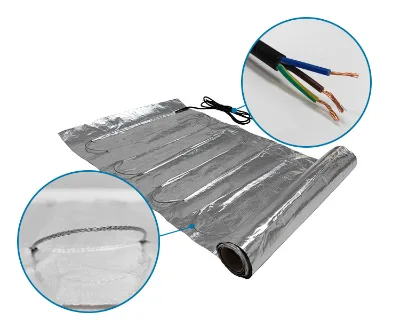
The global market for electric heating cable mats presents a diverse array of options tailored for residential, commercial, and institutional environments. Based on observed listings, these products are primarily designed for floor heating applications in settings such as hotels, homes, offices, bedrooms, apartments, and schools. The core functionality relies on electric heating systems that provide consistent thermal output, with specific models like the FMAT150/220 and TPHP1231-3057 indicating a range of customizable configurations available to buyers.
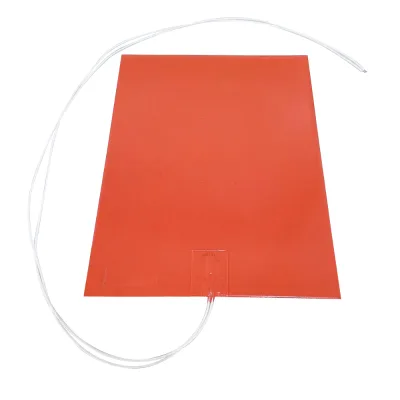
Procurement decisions must account for the variability in product attributes, including color options ranging from red and blue to dark grey and orange, which may influence aesthetic integration within specific interior designs. The supply chain is anchored in China, with manufacturing origins noted in both Zhejiang and Anhui provinces, suggesting a concentrated industrial base for these heating components. Buyers should recognize that while the product type is consistently identified as a heating cable mat or floor heating part, the specific material composition and insulation properties can vary significantly between suppliers.
Product Scope and Observed Listing Signals
Buyers must first distinguish between standard off-the-shelf units and fully customized solutions, as the market data indicates a strong emphasis on customization capabilities. Many listings explicitly state that the model number, voltage, and dimensions are customizable, allowing for tailored solutions that fit unique project requirements. This flexibility extends to the physical form factor, with single package sizes and gross weights varying to accommodate different shipping and installation logistics, such as the observed 54x13x13 cm package dimensions.
The commercial scope also includes specific packaging and delivery terms that impact the total cost of ownership. Products are frequently supplied in carton boxes, with standard roll lengths often cited as 100 meters per roll, though some listings suggest a broader MOQ range from 1 to 1000 units. It is critical to verify whether the "100 meters" figure represents a standard roll length or a minimum order quantity, as this distinction directly affects inventory planning and cash flow for large-scale projects.
Technical Specifications to Verify
Technical due diligence requires a rigorous verification of electrical and thermal performance parameters to ensure system reliability. Key specifications to confirm include the insulating resistance, which should meet or exceed 50mΩ, and the power deviation, typically expected to remain within ±5% of the rated output. The temperature range is another critical metric, with some observed data suggesting operational capabilities from -30°C up to 260°C, though buyers must validate these limits against their specific application needs to prevent material failure.
Dimensional and material consistency is equally vital for successful installation and long-term performance. Buyers should scrutinize the thickness of the heating elements, which can range from 1.5 to 4 mm, and verify the wire length specifications, which may be fixed at 200mm or fully customized. Additionally, the standard operating temperature range for the system, observed in some listings as 38°C to 50°C, must be cross-referenced with the intended ambient conditions of the installation site to ensure comfort and efficiency.
Compliance and Safety Documentation
Safety compliance is a non-negotiable aspect of sourcing heating mats, with CE and RoHS certifications appearing frequently in product listings as baseline requirements. These certifications indicate adherence to European safety standards regarding electrical safety and the restriction of hazardous substances, which is essential for importing into regulated markets. However, buyers must treat these certifications as observations of specific listings rather than universal guarantees, requiring direct verification of valid certificates for each batch of goods purchased.
Beyond basic electrical safety, the documentation should include proof of ISO standards compliance, with some suppliers citing ISO and TUV marks alongside CE and RoHS. The presence of these standards suggests a higher level of quality management and product testing, but the specific version of the standard (such as EN 60335-1) should be confirmed through official documentation rather than assumed from marketing materials. Ensuring that the supplier can provide up-to-date test reports is crucial for mitigating liability and ensuring the safety of the end-users in residential and commercial spaces.
Cost Drivers and Commercial Terms
The pricing structure for heating mats is influenced by a complex interplay of customization levels, material costs, and order volumes. While observed price ranges span from $1 to $200, this wide variance likely reflects differences in wattage, length, and the degree of customization required for specific projects. Buyers should be wary of low-cost entries that may lack essential features or certifications, and instead focus on the total value proposition, which includes warranty coverage and after-sales support.
Commercial terms such as the minimum order quantity (MOQ) and payment conditions significantly impact the feasibility of procurement for different business sizes. The market shows an MOQ range from 1 to 1000 units, with specific listings noting a 100-meter minimum for heating cable mats. Understanding these thresholds is essential for budgeting, as exceeding the MOQ may unlock better unit pricing, while smaller orders might incur higher per-unit costs or require special handling fees.
Supplier Qualification and Quality Control
Supplier qualification extends beyond basic product availability to include the robustness of their project solution capabilities and after-sales infrastructure. Leading suppliers in this sector often offer comprehensive services such as graphic design, 3D model design, and total project solutions, which can streamline the integration of heating mats into complex building designs. The availability of online technical support and return and replacement policies further indicates a supplier's commitment to resolving issues that may arise during installation or operation.
Quality control processes must be verified through the supplier's ability to maintain consistent product standards and material integrity. The observed use of non-woven materials and specific brand names like "youyu" suggests that some manufacturers have established reputations, but buyers should not rely solely on brand recognition. Instead, it is advisable to request samples for independent testing and to audit the supplier's production facilities to ensure that the "FYMAT" standard and other claimed specifications are consistently met across all production runs.
Long-Term Procurement Checks
Sustainable procurement requires a focus on the longevity and durability of the heating mats, with warranty periods serving as a primary indicator of expected product life. Many listings highlight warranties exceeding five years, which implies a high confidence in the product's resistance to wear and thermal cycling. Buyers should treat these warranty claims as conditional on proper installation and maintenance, and ensure that the terms clearly define what is covered, including potential defects in the heating elements or insulation.
Continuous monitoring of supplier performance and product consistency is necessary to maintain operational reliability over time. As the market evolves, buyers should regularly re-evaluate the supplier's ability to meet changing standards and demand fluctuations, particularly given the diverse origins in Zhejiang and Anhui. Establishing a long-term partnership with a supplier who demonstrates adaptability and a commitment to quality assurance will help mitigate risks associated with supply chain disruptions and ensure a steady supply of high-performance heating mats for future projects.
FAQs
What certifications are available for electric heating mats?
Electric heating mats commonly carry CE, ROHS, and ISO certifications. Some specific models may also include TUV certification. Buyers should verify the exact certification list for each product variant, as compliance requirements vary by region and application type.
What is the typical MOQ for heating cable mats?
The observed minimum order quantity for heating cable mats is 100 meters. This quantity often corresponds to a single roll or carton box. Buyers should confirm if smaller trial orders are possible or if the MOQ applies to the total order value.
Can heating mats be customized for specific dimensions?
Yes, customization is available for heating mats. Dimensions, voltage, and model numbers can often be tailored to project requirements. Suppliers typically offer customized specifications to fit specific floor areas or heating system designs.
What is the standard packaging for heating mats?
Heating mats are typically packed in carton boxes. A common configuration is 100 meters per roll, box, or carton. This packaging ensures the mats remain protected during shipping and storage while maintaining their structural integrity.
What applications are suitable for electric heating mats?
Electric heating mats are suitable for hotels, homes, offices, bedrooms, apartments, and schools. They function as floor heating parts or general heaters. The modern design style makes them compatible with various interior decor themes.
What is the warranty period for heating mats?
The warranty for these heating mats is more than 5 years. This coverage typically includes online technical support and return or replacement services. Buyers should review the specific terms to understand what defects or issues are covered.
What is the operating temperature range for heating mats?
The operating temperature range for these heating mats is -30 to 260 degrees Celsius. This wide range allows for reliable performance in various environmental conditions. The power deviation is typically within plus or minus 5 percent.